
Vintage vs. Modern Pyrex: Spotting the Real Deal
Distinguish authentic vintage Pyrex from current reproductions with this visual guide. Learn key identifiers to build your collection with confidence.
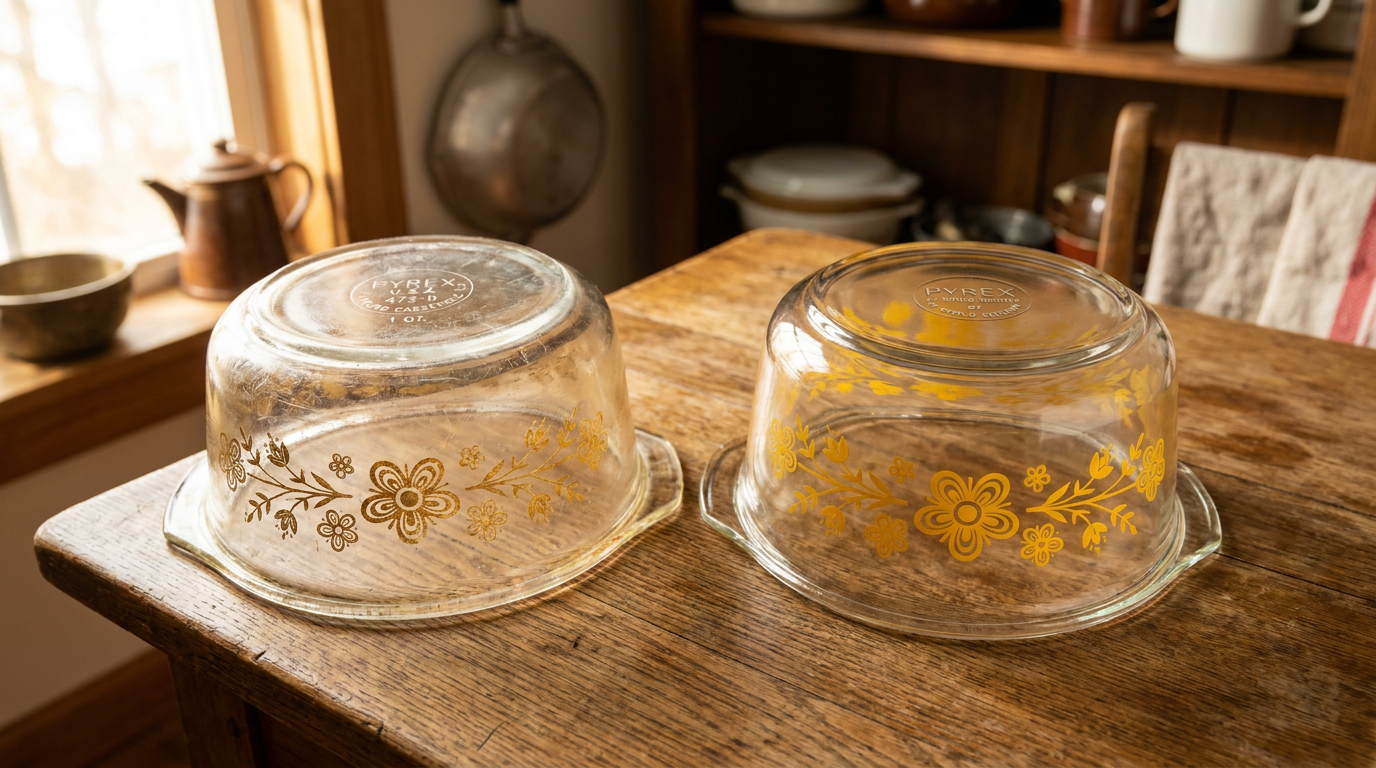
Vintage Pyrex vs. Modern Reproductions: A Quick Visual Guide
For collectors, resellers, and home cooks, vintage Pyrex is more than just kitchenware; it's a piece of Americana, often cherished for its durability, vibrant patterns, and nostalgic appeal. However, the resurgence in Pyrex's popularity has led to an increase in modern reproductions, which can sometimes be confused with their vintage counterparts. Knowing how to distinguish between the two is crucial for making informed purchases and ensuring the authenticity of your collection.
The Allure of Vintage Pyrex
Original Pyrex, particularly pieces manufactured by Corning Glass Works before 1998, is renowned for its borosilicate glass composition. This material offered superior heat resistance and durability compared to soda-lime glass. Collectors are typically drawn to the iconic patterns (e.g., "Butterfly Gold," "Gooseberry," "Friendship"), the heft and quality feel of the glass, and the historical significance of these kitchen staples. Each piece tells a story, often bearing the marks of decades of use and love.
Modern Pyrex: A New Era of Manufacturing
After Corning sold the Pyrex brand to World Kitchen (now Instant Brands) in 1998, the composition of Pyrex glass for consumer products in North America transitioned to tempered soda-lime glass. While still functional and safe for everyday use, these modern pieces differ significantly in material, design nuances, and markings from their vintage predecessors. Reproductions of popular vintage patterns are also increasingly common, manufactured both by Instant Brands and other companies, sometimes leading to confusion.
Key Visual Identifiers: Vintage vs. Modern
When evaluating a piece, pay close attention to several key areas:
1. The Markings and Backstamps
This is often the most reliable differentiator.
- Vintage Pyrex: Look for the "PYREX" uppercase branding. Early pieces might have a circle logo surrounding "PYREX A-xx" (where A-xx is the model number). Later vintage pieces (post-1950s) will often feature a simpler "PYREX" in all caps, sometimes accompanied by "MADE IN U.S.A." or "Corning, NY." The catalog number (e.g., #401, #043) is typically stamped into the bottom. Sometimes, the word "Trademark" is present.
- Modern Pyrex: Contemporary Pyrex (by Instant Brands) usually features a lowercase "pyrex" logo, often with the registered trademark symbol (®) and explicitly stating "MADE IN U.S.A." or "Made in China" in some cases, or sometimes no country of origin for specific models. Reproductions by other companies will have entirely different branding or no branding at all, which is a major red flag if it purports to be vintage Pyrex. The catalog numbers are generally structured differently or omitted entirely for decor-only reproductions.
2. Glass Composition and Weight
- Vintage Pyrex: Borosilicate glass tends to feel slightly lighter and thinner for an equivalent volume compared to modern soda-lime glass, despite its superior strength. It often has a distinct, almost bluish tint when held up to a strong light, though this can be subtle.
- Modern Pyrex/Reproductions: Modern soda-lime glass is generally thicker and heavier. It lacks the distinctive borosilicate tint. Reproductions, especially those not made by Instant Brands, can vary widely in glass quality, sometimes appearing cloudy or having noticeable imperfections.
3. Color and Pattern Vibrancy
- Vintage Pyrex: The colors on vintage pieces, while they can show wear, often have a specific depth and saturation unique to the manufacturing process of the time. The patterns are usually applied as a baked-on enamel. When wear occurs, it typically manifests as fading, scratches, or flecks of paint loss.
- Modern Reproductions: Re-release patterns can look similar, but often the hues are slightly off, or the application might appear flatter or less vibrant than the original. Some reproductions might use decals or less durable paint methods, which can chip or scratch differently. Pay close attention to the crispness of the lines and alignment of the patterns.
4. Shape and Mold Lines
- Vintage Pyrex: The molds used for vintage pieces often had distinct characteristics. Look at the handles, rims, and base for subtle differences. Mold lines might be visible but are generally smooth and uniform.
- Modern Reproductions: While some modern pieces aim for close fidelity, minor variations in shape, handle design, or even the curvature of a bowl can indicate a reproduction. Mold lines might be more pronounced or rougher on lower-quality fakes.
5. Edges and Rims
- Vintage Pyrex: The rims of vintage Pyrex pieces are typically meticulously finished, feeling smooth and uniform to the touch.
- Modern Reproductions: Some reproductions might have less refined edges or rims that feel slightly rougher or feature small imperfections from the molding process.
Remember, the best way to develop an eye for vintage Pyrex is to handle as many pieces as possible. Visit antique shops, estate sales, and flea markets to compare genuine articles side-by-side with any reproductions you encounter. If you're hunting for specific, rare Pyrex patterns but can't make it to every sale, consider leveraging the expertise of local ProxyPals. They can attend estate sales on your behalf, meticulously inspect items, and confirm authenticity before you commit to a purchase, ensuring your collection remains pure and valuable. Find out more about how they can assist your collecting journey at https://proxypals.com.
In Summary
Distinguishing between vintage and modern Pyrex requires attention to detail. By focusing on trademarks, glass characteristics, color quality, and mold specifics, you can confidently identify authentic vintage pieces. This not only protects your investment but also connects you more deeply with the rich history behind these enduring kitchen classics.
Want a Pal at your next estate sale?
Hire a verified local proxy buyer. Escrow-protected. Nationwide.
Hire a Pal