
Pottery Marks 101: Identifying McCoy, Roseville, and Weller
Unlocking the mysteries of pottery marks can transform estate sale finds into cherished collectibles. Learn to distinguish iconic American pottery from McCoy, Roseville, and Weller.
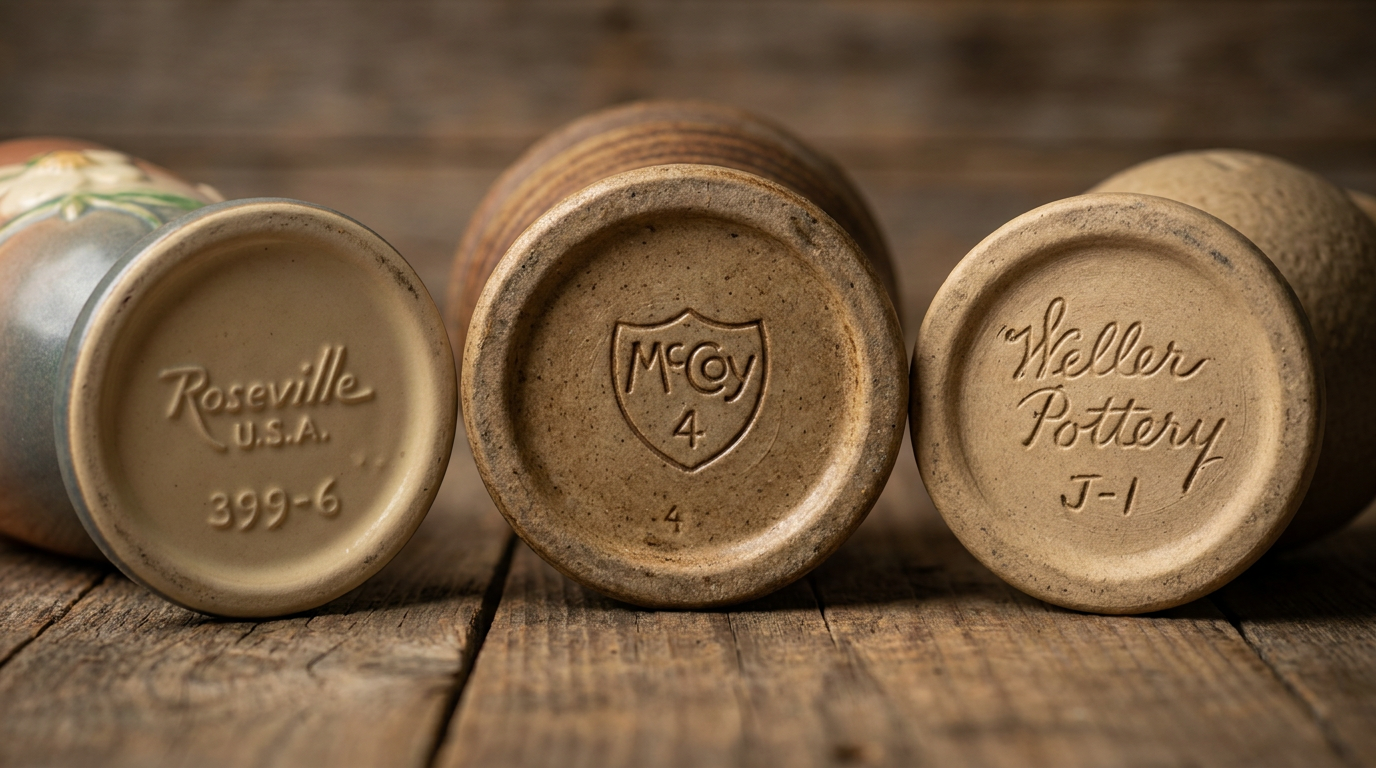
For collectors, resellers, and casual enthusiasts alike, understanding pottery marks is a foundational skill. These small, often subtle, imprints provide a wealth of information about a piece's origin, age, and authenticity. This guide delves into three giants of American pottery: McCoy, Roseville, and Weller, equipping you with the knowledge to identify their distinctive marks.
Why Pottery Marks Matter
The presence and clarity of a pottery mark can significantly impact a piece's value and desirability. A well-defined mark verifies authenticity, assuring collectors they are acquiring a genuine article. Furthermore, marks often include dates or serial numbers, helping to pinpoint the manufacturing period. Without these identifiers, even a beautiful piece might be dismissed as an unmarked 'generic' item, failing to realize its true potential on the market.
McCoy Pottery
Founded in Ohio in 1899, the Brush-McCoy Pottery Company, later simply McCoy Pottery, became a prolific producer of utilitarian and decorative ceramics. Known for its wide array of products, from cookie jars and planters to art pottery and dinnerware, McCoy pieces are often characterized by their sturdy construction and appealing glazes.
Identifying McCoy Marks:
- Early Marks (Pre-1930s): Early pieces might bear a simple 'McCoy' in block letters, sometimes with 'USA' or 'Ohio'. Some very early items may have no mark at all, relying on form and glaze characteristics for identification.
- Mid-Period Marks (1930s-1960s): This era saw the introduction of more stylized 'McCoy' signatures, often underlined or enclosed in an oval or shield. The 'NM' mark (Nelson McCoy) was also used, particularly after 1933.
- Later Marks (1960s-1980s): As production continued, marks became more standardized, usually featuring 'McCoy' in a distinctive script or block font, sometimes with a number (mold number) and 'USA'.
- Key Characteristics: Look for strong, often earthy glazes, and a wide variety of forms. McCoy pieces often have a stoneware look, even if they are earthenware.
Roseville Pottery
Also hailing from Ohio, Roseville Pottery operated from 1890 to 1954 and is celebrated for its exquisite art pottery. Roseville is renowned for its artistic designs, intricate molds, and superb glazes, making it highly coveted by collectors.
Identifying Roseville Marks:
- Early Marks (Before 1920s): Very early Roseville pieces might be unmarked or bear an incised 'R' or 'Roseville'. Some might have paper labels that are rarely preserved.
- Mid-Period Marks (1920s-1930s - The Golden Age): This is where most iconic Roseville patterns (like Freesia, Futura, Mostique) come in. Marks are typically raised, molded into the base, and read 'Roseville U.S.A.' or 'Roseville' with a shape number. The pattern name is rarely part of the molded mark itself but might have been on a paper label.
- Late Period Marks (1940s-1950s): Marks during this era are almost exclusively molded, often featuring 'Roseville U.S.A.' with a mold number and size. The script became more stylized.
- Key Characteristics: Roseville is known for its graceful forms, often inspired by nature, and its rich, matte or semi-gloss glazes that complement the relief designs. It feels generally lighter and more refined than McCoy.
Weller Pottery
Established even earlier in Ohio in 1872, Weller Pottery was another prominent American art pottery manufacturer. Weller produced an astonishing range of wares, from utilitarian jugs to highly artistic pottery, often competing directly with Roseville.
Identifying Weller Marks:
- Early Marks (Late 19th - Early 20th C.): Early Weller pieces might have an impressed 'WELLER', or a small circular stamp reading 'WELLER POTTERY'. Some patterns like Louwelsa might have the pattern name incised.
- Mid-Period Marks (1910s-1930s): This period features many well-known patterns (like Dickens Ware, Sicardo, and Forest). Marks often include an impressed 'Weller' script or block letters, sometimes with a mold number. The 'Flemish' line might explicitly say 'Weller Faience'.
- Later Marks (1930s-1940s): Marks became more simplified, often an impressed 'Weller' or 'Weller Since 1872'. Some marks are less distinct or even smudged, reflecting the challenges of mass production.
- Key Characteristics: Weller pottery displays incredible artistic diversity, with various glazes from high gloss to matte, and often features hand-painted decorations or distinctive relief work. Identifying specific patterns is crucial for Weller collectors.
The Thrill of the Hunt
Attending estate sales offers the best chance to discover these pieces firsthand. The unique thrill of sifting through items, turning them over to find a hidden mark, is an experience in itself. Whether you're an experienced collector or just starting out, knowing these essential pottery marks allows you to approach each potential treasure with confidence. Should you find yourself unable to attend a promising estate sale, remember that services like ProxyPals can bridge that gap. A local Pal can be on-site, providing expert eyes to examine those tell-tale marks and secure your next pottery gem. Visit https://proxypals.com to find out how you can gain access to sales you might otherwise miss.
A Note on Fakes and Reproductions
As with any collectible market, fakes and reproductions exist. Always exercise caution, especially when a deal seems too good to be true. Look for discrepancies in finish, weight, and the crispness of the mark. A genuine mark will typically be clear, consistently applied, and show appropriate aging with the piece. When in doubt, consult a reputable expert or refer to comprehensive pottery reference guides.
Want a Pal at your next estate sale?
Hire a verified local proxy buyer. Escrow-protected. Nationwide.
Hire a Pal